
Establishing an International Sponsor Organisation
Configuration of an Ecosystem and mapping third-party Components
Establishing and implementating DAOs
Digital Assets developed for new Protocols
At this point, the base Protocol components have been mapped and are now ready to add additional component integration, configurations and specialty provisions.
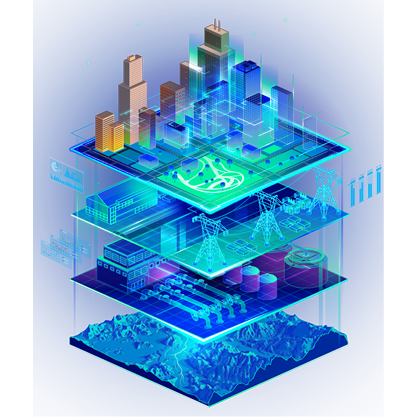
This section focuses on traditional "Infrastructure Utilities" which are evolving with "Digital Twin" technologies to enhance economic interaction, velocity of money and increase economic growth to improve local Community Quality of Life.
For particpants wishing to use this Component Digital Infrastructure Architecture of Alliance iii.o, the following information may be useful in constructing the Components of a new PROTOCOL to be available for local and/or global use.
A core design element of the technologies described herein is blending existing legacy systems with new digital technologies. While such combination may be viewed as a hybrid structure, we prefer to envision a bridge from existing frameworks into a digital transformation to new digital intelligent technologies. As widespread adoption occurs, traditional methodologies can naturally fall away, as users become comfortable with more efficient and useful interactions.
AD&C Principals, affiliates and members organise structures which may comprise legacy as well as digital components, including hybrid organisations. At the centre of these organisational construct is the "STAR" concept. Securities | Security, Tax, Accounting and Regulatory compliance are key elements in design and operations.
Initiatives comprise Assets within respective Ecosystems. These Assets may be allocated to various types of Components described below.intro.lighthousephilanthropies.org
Assets may be allocated to specific types of Components, while being held through Lighthouse Philanthropies Innovation and Infrastructure Foundations, designed to mitigate myriad capital markets, banking, securities and systemic risks and/or be transformed into digital assets.
Lighthouse Philanthropies comprise myriad non-profit foundations which have facilitated advanced assets and risk portfolio facilities which are internationally regulated. For more information, press the link below image above.
Bringing US Uniform Commercial Code (first perfected security interests) into the Digital Age with Controllable Electronic Records ("CER") operating through specialised digital | legal infrastructure components
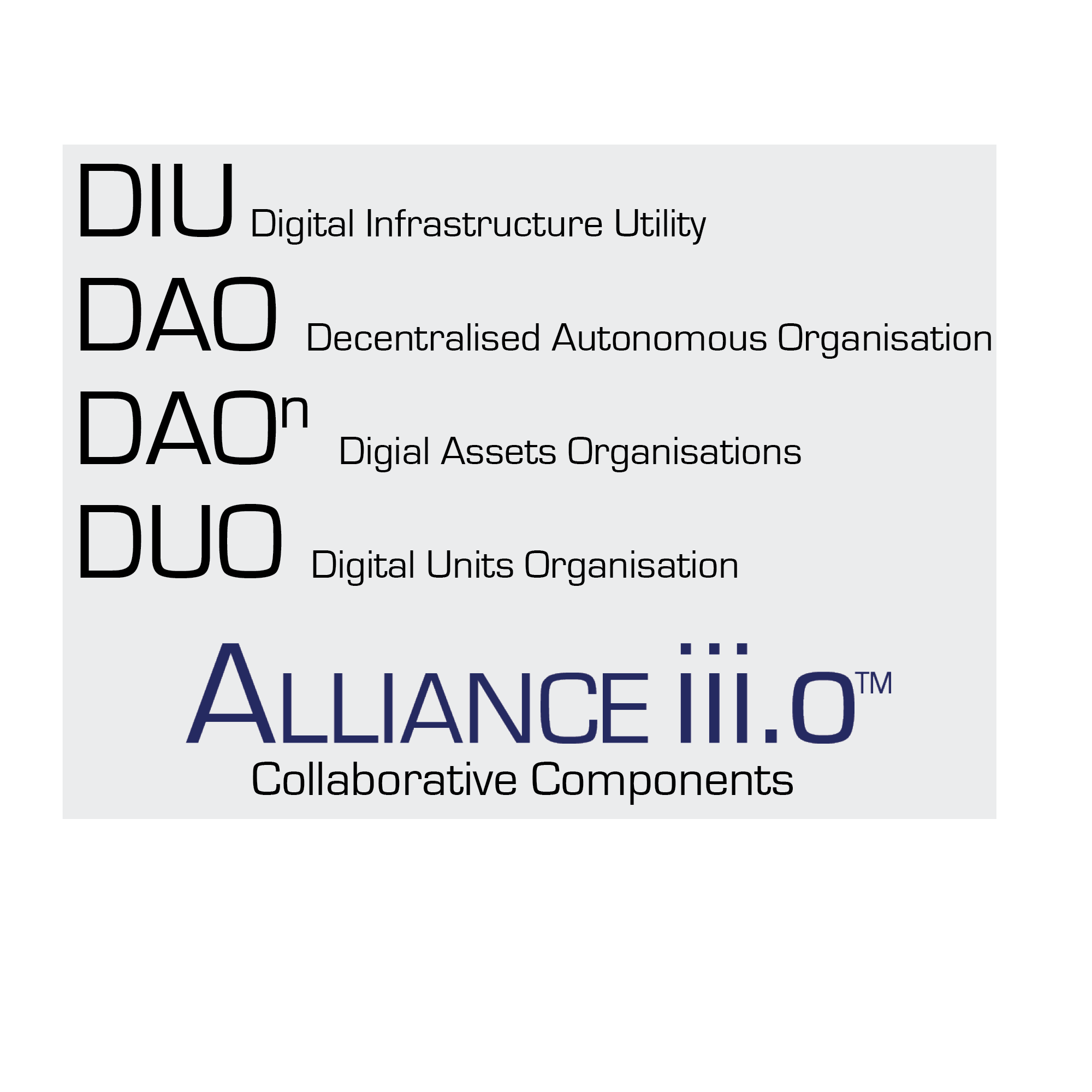
Alliance iii.o architecture includes four primary types of operational Component organisations.
Digital Infrastructure Utilities or "DIU" have specific purposes and operate within "known" constraints based on their applicable Protocols, consistent with Protocols and other applicable governance of the Ecosystem within which they operate.
A Decentralised Autonomous Organisation or "DAO" represents an organisation of digital nodes which may operate autonomously without a single point of control. This framework may be used to achieve a wide range of bespoke objectives.
DAOn is a form of Digital Assets Organisation, designed to store and administer both legacy and digital asset and instrument types, including a wide range of risk mitigation and transfer efficiency objectives.
DUO represents an approach to unitising digital assets in an organisational framework. Digital Units may include Controllable Electronic Records, recently admitted into legislation by a number of US States.
These organisational types are often "legal entities" subject to a specific geographic jurisdiction, which are operate in conjunction with a "Digital Twin", which may reside in the same jurisdiction or benefit form "ajurisdictional status" as a form of "digital organisation".
Digital Infrastructure Utilities are primarily designed as jurisdiction based legal entities, owned in a fashion, facilitating optimisation and compliance with global regulatory standards. A DIU is designed to be operated through a Digital Twin and capable of interacting with digital organisations.
Decentralised Autonomous Organisations provide a range of relationship connectivity and collaboration infrastructure, digitally connecting Ecosystem participants, information, equipment and transactional functionality. An Initiative and its Ecosystems DAOs, are registered and connected to IGX and OneGlobal Connectivity networks. DAOs are generally designed to be ajurisdictional. A DAO acts as a registry service under the Alliance iii.o Protocol.
WHAT IS A DECENTRALISED AUTONOMOUS ORGANISATION?
A Decentralised Autonomous Organisatio
n ("DAO") may be viewed as a group of HUMANs, natural legal persons, non-natural legal persons (often referred to as juridical persons) and/or, with the recognition of robots by UAE and digital intelligences by other countries, i.e. INTELLIGENCEs. It may also include digital nodes and other types of tangible and intangible assets.
Decentralised indicates the network has no "central" point. Further, a DAO is autonomous. In essence, it has a set of governance conditions, similar to bye-laws of a company, which cannot be changed without participants within a DAO agreeing to effect such alterations. Finally, it has the broadest definition of "organisation", in essence, a method of assembling discrete elements, rather than a fictitious legal person.
Well, that's one definition! With more than 18,000 "digital currency" protocols, let alone n number of digital assets, use tokens, non-fungible tokens, etc., there are similarities, there are n differences between DAOs.
The above might be descriptions written by non-technical parties. When we peer deeper into actual technology implementation, differences become more plentiful and impactful. For example, existence of a server node, might give rise to a central point, thereby creating a "jurisdictional" nexus of a DAO, subjecting it and/or its participants to the laws of a particular jurisdiction, if not multiple jurisdictions.
A serverless network properly constructed of adhoc nodes with atomised processing, memory, storage, and network interaction with "edge" devices and logical containers, may enable a compelling argument that such DAO is ajurisdictional, i.e. without physical jurisdiction, or its jurisdictional attributes are solely within its own governance, consensus and sovereignty.
For example, one might argue that a DAO comprised solely of HUMANs under UN Declaration of HUMAN Rights, might be considered a sovereign DAO. Such ORGANISATION might include in its GOVERNANCE PROTOCOL ("Constitution") a means of voting consensus to alter the parameters of interaction between the HUMAN participants of the DAO.
This new approach is not without governance, consensus and voting requirements within the DAO.
The design of a DAO and its "bridge" or "connection" points becomes particularly important. Fortunantely, centuries of precedence provide guidance, for example, "free trade zones", "ports", and "agents".
Digital Assets Organisations may be structured as jurisdictional legal entities or ajurisdictional services designed to facilitate transacting, persistance, allocation and/or status of digital links to identified assets ("digital assets").
A DAOn generally includes a Digital Twin. It may take the form of an SPC, if providing segregated protection of digital assets and/or segregated protection of links from digital assets to non-digital assets.
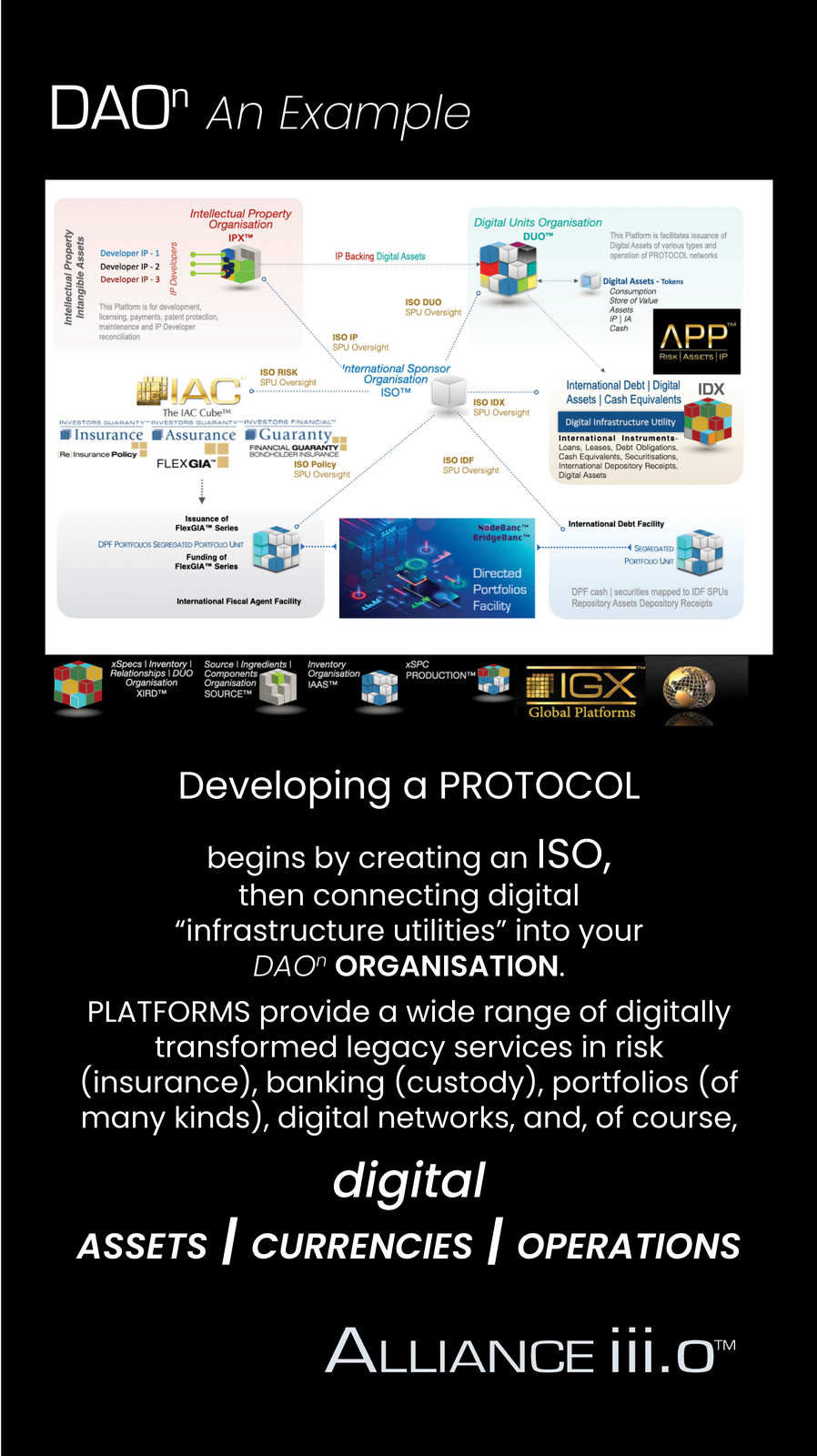
A Digital Units Organisation is designed to facilitate unitisation of assets, including securities, physical assets, intangible assets, intellectual property, private currency, and other forms of value. A DAO may take the form of a jurisdiction based legal entity or an ajurisdictional organisation.
Trading stamps began in the United States in 1890 as a loyalty program. In 2021, US Treasury loaned US airlines funds collateralised by airline Rewards Programs. Rewards points and Green Stamps have been defined as "private currency".
Digital Assets of varying types may be implemented within an ECOSYSTEM as determined by ISO Sponsor.
Of particular note is digital Reserved Currency which operates through a Currency DAO.
AD&C Principals, affiliates and members organise structures which may comprise legacy as well as digital components, including hybrid organisations. At the centre of these organisational construct is the "STAR" concept. Securities | Security, Tax, Accounting and Regulatory compliance are key elements in design and operations.
The schematic below illustrates various Components and their flexible integration.